
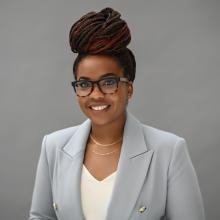
Bio:
Alexandrea R. Golden, Ph. D. is an Assistant Professor of Clinical Psychology at the University of Memphis. She earned her doctorate in Clinical-Community Psychology at the University of South Carolina and completed her postdoctoral fellowship at Cleveland State University in the Center for Urban Education. Dr. Golden’s scholarship focuses on the resilience and positive development of racially minoritized youth who experience racism with a focus on Black adolescents. Her work focuses on three interdisciplinary lines of research including: (1) school racial climate, (2) peer racial socialization, and (3) critical consciousness. Dr. Golden is committed to empowering marginalized youth and amplifying their voices and experiences through her translation and community-engaged research and practice.
Q: Why did you decide to choose developmental science as a course of study or career?
A: I chose developmental science because, in reflecting in my own development as a young Black girl from a marginalized majority minority city (Detroit), I recognized the many influences and experiences that shifted my trajectory toward what I define as success. I also recognized that those experiences were not always available to other youth around me, whether they were the family values and support that pushed me to achieve academically or the chess teacher who mentored me. As a researcher, I am invested in better understanding the factors that impact the trajectories of Black youth and create opportunities for youth from marginalized communities to thrive despite the challenges they may face. After all, every child deserves the chance to thrive.
Q: What advice would you give to a student beginning their Ph. D. studies in developmental science or related?
A: My advice to a student beginning their studies would be intentional about networking and connecting with other up-and-coming scholars who are also in your area of research. It is no secret that graduate school is challenging, but having people who understand what you are going through and can support you in ways that directly translate to your success is critical. Additionally, some of these same people may go on to be not only your collaborators, but also your friends and help you navigate the many stages of your scholarly career.
Q: Why did you join the Black Caucus and how does it facilitate connection among members all year long?
A: I joined the Black Caucus to have the opportunity to celebrate with and learn from other incredible scholars whose work and missions aligned with my own. Being part of the Black Caucus has been a remarkable experience. I have been able to network with scholars in my area, I found a community that uplifts me as a scholar and an individual, and the Black Caucus has several workshops and events throughout the year that remind me why I am in the field and how to continue on despite challenges. Being a member of the Black Caucus (since I was a graduate student) has been truly life changing.