
Bio:
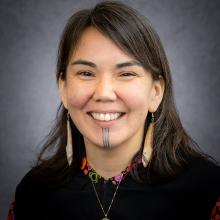
Dr. Jessica Saniguq Ullrich is an Assistant Professor at IREACH. Her family is originally from Kiŋigin – Native Village of Wales, and she is a Tribal Citizen of Nome Eskimo Community. Dr. Ullrich earned her BA in Psychology and Philosophy from Gonzaga University, Master of Social Work degree from University of Alaska Anchorage, and PhD in Social Welfare from University of Washington. Her projects include connectedness curriculum development with her Tribe to provide prevention and wellbeing services, and creation of an Alaska specific ICWA practice model with multiple stakeholder input and guidance. Dr. Ullrich loves community-based work, storytelling, knowledge sharing, relational healing and supporting collective wellbeing. She is doing everything she can to share what she is learning about the interrelated wellbeing of a person, family, community, Earth, and Spirit to assist with multiple levels of positive change. Dr. Ullrich’s favorite thing to do is get out in nature, especially by the ocean and in the mountains. Traveling and exploring the beauty of the earth is a passion of hers, and she also loves spending time with her teenage children, playing games, and laughing with her partner. These connections bring her life joy.
Why did you decide to choose developmental science as a course of study or career?
I have a background working within Alaska child welfare. I worked on the frontlines, was an Alaska Native in-home family preservation case manager, Regional Indian Child Welfare Act (ICWA) Specialist, ICWA family services supervisor, and child welfare trainer. I saw firsthand the struggles children from birth to 18 were going through in terms of maltreatment, removal, separation, and disconnect. It was problematic to me to see a systemic intervention compound the trauma and negatively affect child development in many situations rather than alleviate it. It seemed like child welfare was operating off misaligned theories and practice frameworks with Indigenous populations.
Who inspired you and why (and/or who inspired you to go into your chosen field of study)?
I was really inspired by Indigenous scholar Dr. Cindy Blackstock from Canada when she provided a keynote address at an annual NICWA conference back in 2008. I loved how she was able to use research to push for policy and practice changes that better served Indigenous families. I was also inspired by Terry Cross, the NICWA President and CEO as he provided training and technical assistance across Alaska on ways to improve outcomes for Alaska Native children, families and communities. And it was an honor to learn directly from Dr. Maria Yellow Horse Brave Heart about historical trauma and the ways Indigenous communities were addressing it in culturally relevant ways. From these scholars and leaders, I decided to go back to school to pursue a PhD in hopes that I could make similar contributions to the field.
Do you have a mentor, or mentors, who have been instrumental to your career and, if so, who and how?
While in the PhD Program my #1 support came from other Indigenous scholars in cohorts ahead of me. I wouldn’t have made it through the program without them. They gave me guidance on how to handle the stress of being in a research institution that often contradicted Indigenous ways of knowing and being. I was also provided with fellowship opportunities like the Native Child Research Exchange that connected me with other driven and passionate scholars, and they gave me honest feedback on ideas and proposals.
I also received instrumental support from the Indigenous Wellness Research Institute at UW. Mentors there, and leaders from back home in Alaska helped me shift from a plan to study trauma to studying wellbeing. This shift made all the difference. This led to the development of an Indigenous Connectedness Framework that has been central to my research endeavors ever since because there is so much more to learn about how to support children’s relational identities and relational wellness, especially after trauma may have occurred. It’s not just about individual treatment of children, it’s about the relational treatment of whole families, communities and societies. We need to come back in right relationship with one another on multiple levels for the benefit of all children.
What advice would you give to a student beginning their Ph.D. studies in developmental science or related?
Never disconnect yourself from your community. My community gave me my PhD right alongside my university supervisory committee because without them I wouldn’t have been able to engage in research at all. Academia can feel very isolating in the dissertation process, even though the real world has a team-based approach. Think of yourself as a community team member who has some research skills to share. You matter, so take good care of yourselves. And your community’s work matters so gift the knowledge right back to the community. Child wellbeing is a shared responsibility, and we can do our part to promote that no matter what role and responsibility we have in official and unofficial capacities. We have a lot of power in connectedness, that is what can help us get through the challenging times together.
What publication or book would you say is a must read in the field (and why)?
If you want to learn more about Indigenous connectedness, here’s a link to my dissertation.